Remember when browser games meant blocky Flash titles that crashed every ten minutes, right when you were about to beat your high score? That era’s dead. Buried. In 2026, there’s one name that keeps popping up whenever gamers start talking about where browser-based gaming is actually headed: PlayMyWorld. If you’ve been digging around for news on it and want a straight answer without wading through fluff, good that’s what this is. What the platform actually is, what’s changed this year, and whether it’s worth your time. Let’s get into it.
What Exactly Is PlayMyWorld?
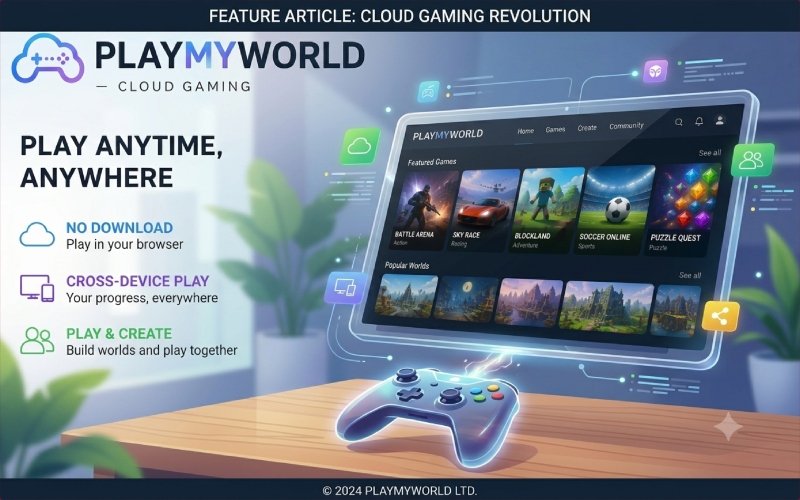
It’s a browser-based, cloud-powered gaming platform. No installs. No giant downloads sitting there at 4% for ten minutes while you question your life choices. You open your browser, log in, and you’re playing. The heavy lifting happens on remote servers, and the gameplay streams to your screen. That part trips people up at first, honestly. An old laptop or a mid-range phone can run stuff that would normally choke a weaker machine completely, and it still feels a little like a magic trick even once you know how it works.
Why Everyone’s Talking About It This Year
A few things are happening at once. Gamers are tired of downloads eating up storage. People want to hop between devices mid-session without losing progress: start on the laptop, finish on the phone, no fuss. And there’s this growing pull toward platforms where you’re not just playing, you’re building something too. PlayMyWorld sits right at that overlap. Part game library, part sandbox, part social space, which honestly is a rarer combination than you’d think. That’s probably the biggest reason it keeps showing up in gaming threads lately.
No Fancy Hardware Required
This is arguably its strongest pitch. Most modern games basically demand a solid GPU or a current-gen console just to run without stuttering. PlayMyWorld skips all that; the processing happens on the platform’s own servers, not your device. All you need is a decent connection and a browser. That’s genuinely it. Which opens things up for a lot of people who’d otherwise be shut out: students on a budget, casual players, anyone without a dedicated gaming rig gathering dust in the corner. Even a basic Chromebook handles titles that would normally need something far pricier.
Smarter Gameplay Under the Hood
The platform leans on some behind-the-scenes tech to keep things from feeling stale. Difficulty shifts based on how you’re actually performing instead of sitting at one fixed setting. Matchmaking tries to pair you with players around your skill level, which cuts down on the kind of brutally lopsided matches nobody enjoys. There’s a recommendation feed too, one that gets better the more you play. Kind of like how a music app slowly figures out your taste after enough listening, except this one’s tracking your playstyle instead of your Spotify habits.
Building Things Is Half the Appeal Now
Gaming in 2026 isn’t purely about playing anymore. A big chunk of the draw is being able to make something yourself. PlayMyWorld leans into that hard, with world-building tools for designing maps, environments, and full multiplayer experiences from scratch. Picture something between Roblox and Minecraft in spirit, minus the download. Community-made worlds sit right next to official releases, and honestly, some of the best content on the platform comes from regular players messing around, not the developers. There’s a small monetization angle too. Creators can earn through tips or premium unlocks, which has quietly pulled in a wave of hobbyist designers hoping their side project turns into something bigger.
The Catalog Keeps Filling Up
New titles land almost every month. Action, puzzle, racing, adventure, simulation, sports the usual spread, plus a healthy dose of online multiplayer mixed throughout. Some sessions take five minutes. Others swallow your entire evening. That range feels intentional. Built for people who want a quick distraction and for the ones who’ll spend hours deep in a build. Most of it’s free-to-play, with paid tiers if you want extra cosmetics or features, and new submissions go through automated testing before release, which keeps quality more consistent than a lot of open-upload platforms manage.
Cross-Device Play Actually Works
Switching from desktop to tablet used to mean losing progress or dealing with annoying manual syncing. Not really an issue here. Cloud sync keeps your saved worlds and settings intact no matter what you’re logging in from. Start something on your laptop, pick it back up on your phone during a commute. It genuinely just carries over, and this kind of seamlessness is becoming what people expect by default now. Platforms that can’t manage it feel a little behind already.
Community and Multiplayer
Real-time multiplayer sits at the core of the whole thing. Team up with friends, go head to head with strangers, or work together on a shared build. The community side has grown noticeably this year, with dynamic world events, quests, and collaborative building that keeps people coming back for more than one quick session. There’s also been more focus on community storytelling lately, with occasional features spotlighting standout player-built worlds.
Smoother Than It Used to Be
Nobody wants constant stuttering or dropped connections. Developers clearly put real effort into fixing this over the past year; users are reporting fewer loading interruptions and noticeably better server response, even during busier hours. The interface got cleaner too. Less clutter, easier navigation, especially for people who’ve never touched the platform before. First-timers seem to pick it up fast; menus are labeled clearly enough that there’s barely a learning curve compared to older browser platforms.
A Word on Safety
With something this social, safety’s worth mentioning, especially since younger players make up part of the user base. There are moderation tools built in to manage behavior and content. Still, parental guidance is a good idea for younger users, same as you’d want on any large multiplayer platform. Reporting tools and content filters exist for accounts set up as managed by a parent or guardian.
How Does It Stack Up Against Roblox or Minecraft?
It’s not trying to be a clone of either, but the comparison comes up constantly given the sandbox and creator focus. The real difference is accessibility: Roblox and Minecraft often need downloads or specific hardware, and PlayMyWorld skips all that by staying entirely browser-based and cloud-powered. That’s the edge. Lower barrier to entry, same creative freedom. It’s also not locked to one device by account setup, so jumping between a home computer, a work laptop, or a friend’s tablet doesn’t require any extra hassle.
A Few Tips If You’re Just Starting Out
Sort your internet connection first. Since everything streams from the cloud, a shaky connection hurts you way more than weak device specs ever would. Spend some time exploring the recommendation feed early on too — it needs a bit of activity to figure out what you actually like, so those first few sessions matter more than they seem to at the time. If building interests you more than playing, check the tutorial worlds before jumping into your own project. They walk through the basics without dumping every feature on you at once.
Common Questions
Is it free? Mostly, yes. Some cosmetics and creator tools sit behind optional paid tiers, but you can have a full experience without spending a rupee.
Do I need a strong device? Not really. It’s cloud gaming; your connection matters more than your hardware.
Can I actually build my own worlds? Yep. The world-building tools are a core part of the platform, and a lot of the best content comes from regular users, not the studio.
Is it safe for kids? There are moderation tools in place, but as with any big multiplayer platform, some parental oversight is still a smart idea.
How often does new stuff get added? New titles and updates roll out monthly, with player-made worlds refreshing even more often than that.
Conclusion
The latest PlayMyWorld updates in 2026 point toward a platform that’s genuinely maturing: better performance, smarter matchmaking, a creator base that’s actually active instead of just decorative. Browser-based games used to feel like a compromise, something you settled for when you didn’t have a proper setup. This year, that’s starting to change. Whether you’re after something casual, want to build your own little corner of a world, or you’re just curious what the fuss is about, it’s worth giving a shot.