A Practical Guide to Online Gaming Tournaments
Online gaming tournaments can look confusing at first. There may be registration windows, eligibility rules, check-in times, brackets, match servers, dispute procedures, and different formats for different games. A tournament hub can make that process easier to understand, but only when its event information is current and clearly sourced.
This guide explains how online gaming tournaments generally work, what to check before registering, how to choose an event that matches your experience, and what to verify before relying on information attributed to TheHakEvent. It deliberately avoids presenting unverified tournament claims as facts.
What Is TheHakEvent?
TheHakEvent is presented online as a gaming event or tournament topic, but the available information does not provide enough independent evidence to describe it as a major esports organizer, a confidently established tournament operator, or an official platform for specific game titles. For that reason, this article treats TheHakEvent cautiously and focuses on the practical information a player needs before joining any event.
If TheHakEvent publishes an event schedule, registration page, rules, prize details, or organizer information, readers should verify those details on the relevant official page before registering or sharing personal information.
How Online Gaming Tournaments Usually Work
Most online tournaments follow a simple sequence: an organizer announces an event, publishes eligibility and rules, opens registration, confirms participants, runs a check-in period, and conducts matches according to a bracket or schedule. Results may be published after each round or when the tournament ends.
The exact process varies by game and organizer. Some events use single elimination, while others use double elimination, round-robin groups, Swiss-style formats, or league tables. Prize eligibility, tie-breakers, disconnect rules, and dispute procedures can also differ.
1. Check the Game, Format, and Eligibility
Before registering, confirm the exact game version, platform, region, team size, age requirements, rank requirements, and any restrictions on controllers, peripherals, or accounts. Do not assume that an event is open to everyone simply because it appears on a public tournament page.
2. Read the Rules Before You Register
Look for information about check-in, match timing, allowed hardware or software, communication channels, sportsmanship, disconnections, substitutions, late arrivals, protests, and penalties. If an organizer does not provide understandable rules or a reliable way to ask questions, pause before registering.
3. Prepare Your Setup
Test the game, controller or keyboard and mouse, headset, capture software, and internet connection before match day. If the tournament requires a particular server region or anti-cheat system, install and test it in advance. A backup connection can help, but always check the organizer’s disconnection policy.
4. Do Not Miss Check-In
Many online tournaments require players or teams to confirm their presence before the first match. Check-in windows can be separate from registration deadlines. Convert the event time to your own local time zone and save the official schedule somewhere easy to see.
Choosing the Right Tournament
Beginners usually have a better experience with open community events, casual cups, or lower-pressure brackets. More competitive events may have strict eligibility rules, stronger opponents, larger prize pools, or ranking consequences. Choose an event based on your actual experience and availability rather than prize size alone.
Why Community Matters in Competitive Gaming
The social side of tournaments is a major part of the experience. Players often use community servers to find teammates, discuss strategies, ask rules questions, and follow future events. Streamers and spectators can also build communities around tournaments without competing themselves.
Community discussion should not be treated as official event information. When there is a conflict, use the organizer’s current rules or official announcement as the reference point.
What to Verify Before Trusting a Tournament Listing
- The organizer’s identity and official website or verified social account.
- The game’s exact title and tournament format.
- Registration and check-in deadlines.
- Eligibility requirements and region restrictions.
- Prize details, including whether the prize is guaranteed or subject to conditions.
- Entry fees, payment method, and refund policy, if applicable.
- Official rules and dispute procedures.
- The privacy information and personal data requested during registration.
Be Careful With Payments and Personal Information
Do not enter payment details simply because a tournament page uses gaming logos, urgent language, or a large prize claim. Confirm that you are on the organizer’s genuine website or official registration service before submitting information.
For paid events, check who receives the payment, what the fee covers, whether refunds are available, and how prizes are distributed. Never assume that a prize pool shown in a repost is still current.
TheHakEvent Tournaments in 2026
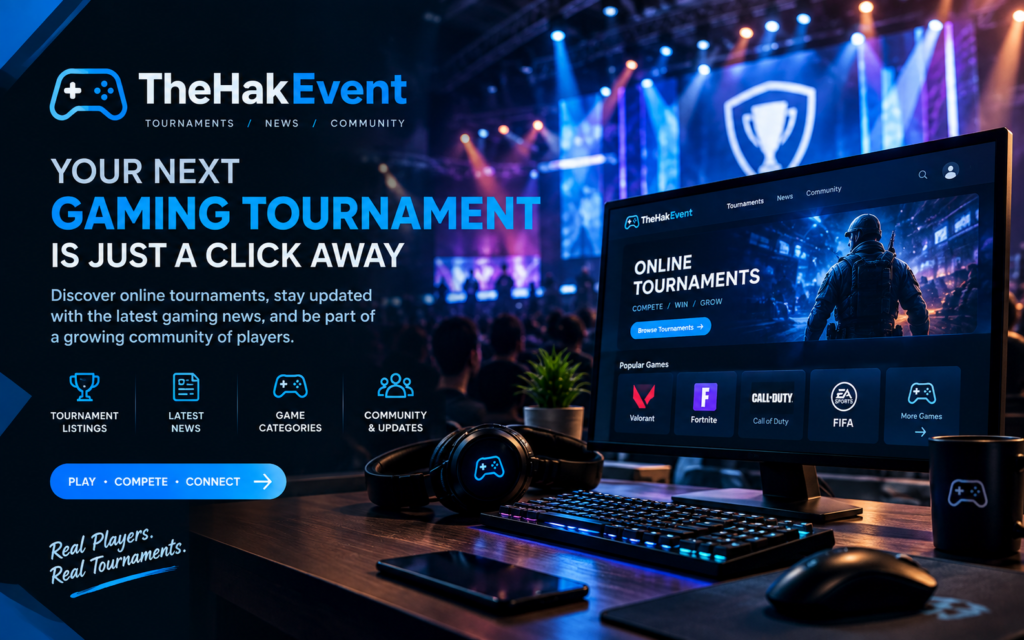
Claims that TheHakEvent is hosting a specific 2026 lineup involving Fortnite, Valorant, Call of Duty, FIFA, regional qualifiers, or particular prize pools should be treated as unverified unless supported by current official event pages or organizer announcements. Those details should not be presented as confirmed facts merely because they appear in a secondary article.
For a 2026 event, check the date, game, registration status, rules, organizer identity, and prize terms immediately before taking part. Tournament schedules can change, and old articles can remain indexed after an event has ended.
How to Avoid Outdated Tournament Information
A useful tournament guide should show when it was last reviewed and should distinguish current information from historical examples. Readers should prefer the newest official rules and registration pages when an article and an organizer announcement disagree.
Publishers should not keep a 2026 tournament claim on the page after the event has ended simply because the keyword still receives searches. Update, qualify, or remove information that is no longer accurate.
What Makes a Useful Gaming Guide?
A strong guide answers practical questions rather than repeating generic statements about esports. It should identify what is known, explain what still needs verification, cite primary sources for event-specific claims, and tell readers what to do next.
It should also make clear who produced the article, when it was reviewed, and whether the writer has direct tournament experience. Never invent first-hand participation, organizer relationships, or testing experience to make an article appear more authoritative.
Final Thoughts
The useful part of an online tournament hub is not simply having a long list of events. The real value is helping players understand which events are current, who is organizing them, what the rules require, and what needs to be verified before registration.
If you are considering a TheHakEvent tournament, start with the official event information, read the rules carefully, confirm the schedule and eligibility requirements, and protect your personal and payment information. That approach is more reliable than relying on a generic tournament article or an old social-media post.