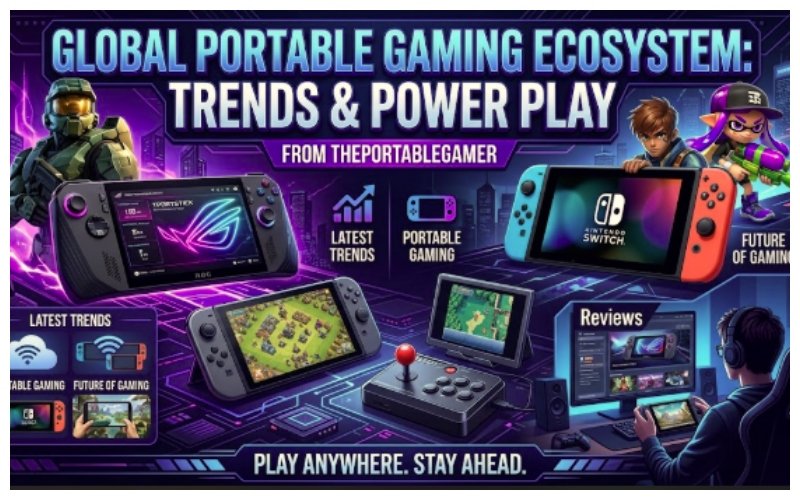
Portable gaming has changed faster in the last few years than most people expected. What used to mean carrying a heavy console or waiting for the next big handheld release now includes plug-and-play sticks, hybrid devices, cloud streaming, and phones that can run serious games. ThePortableGamer’s coverage of Tportstick gaming trends reflects this shift clearly: players care less about raw power and more about how easily they can start playing wherever they are.
This article breaks down the real trends behind that change, explains the difference between convenience-focused and performance-focused devices, and shows what actually matters when choosing your next portable gaming setup.
What Are the Real Portable Gaming Trends Today?
Five major shifts are driving portable gaming right now. They work together rather than competing with each other:
- Hybrid hardware: Devices that deliver console-like experiences in a form that fits everyday life.
- Plug-and-play convenience: Sticks and mini devices that connect to any screen and start games within seconds.
- Cross-platform play: Friends can play together even when one is on a phone, and another is on a handheld or console.
- Cloud streaming: Lower-cost devices can access demanding games by running them on remote servers.
- Mobile esports and short-form content: Competitive play and viral clips have made phone and handheld gaming more visible and social.
The biggest change is not that devices got stronger. It is that the gap between expensive premium handhelds and simple, affordable sticks has narrowed in terms of usefulness. Entry-level options now compete on ease and speed of access rather than trying to match raw performance.
Hybrid Handhelds vs Plug and Play Sticks
Both types of devices solve the same core problem: playing without being tied to a fixed setup, but they do it in different ways.
1. Plug-and-Play Sticks Are Part of the Hybrid Trend
A premium hybrid console (like a Steam Deck or ROG Ally) uses stronger internal hardware for better visuals and performance. A plug-and-play stick takes a simpler route: it removes setup steps and gets you into a game almost immediately after connecting it to a TV or monitor.
Neither approach is better in every situation. One is built for longer, more demanding sessions. The other is built for quick access and convenience. Many players end up using both depending on the moment.
2. Portable Gaming Is Moving Beyond Yearly Upgrades
For a long time, console gaming followed a cycle of new hardware every few years that pushed players to upgrade. Portable devices are starting to break that pattern. Many sticks and handhelds now focus on lasting longer rather than needing constant power increases. A well-designed plug-and-play stick from last year can still feel relevant today because its value comes from convenience, not from keeping up with the highest specs.
3. Retro Gaming Still Shapes Modern Devices
A large part of the appeal of many gaming sticks comes from older titles players already know and love. Instant access to classic games is a strong reason people buy these devices. The same nostalgia factor continues to support handhelds with strong libraries of older or indie titles years after launch.
4. Games Are Adapting to Shorter Sessions
Portable play often happens during short breaks while traveling, waiting, or relaxing for 20,40 minutes. More games are being designed around quick sessions that players can pick up and put down without losing progress or the sense of momentum. This makes portable devices more useful in everyday routines instead of only for long dedicated play times.
Convenience vs Performance: Key Differences
Here is a clear comparison between the two main approaches:
| Feature | Convenience-Focused (Plug-and-Play Sticks) | Performance-Focused (Premium Hybrids) |
| Setup | Ready in seconds with minimal steps | More preparation before playing |
| Cost | Usually more affordable | Usually more expensive |
| Game Library | Often includes many classic titles | Strong support for newer releases |
| Power | Built for lighter gaming needs | Designed for demanding games |
| Best For | Quick and simple sessions | Longer and deeper sessions |
The better choice depends on how you actually play. If you want quick entertainment with almost zero setup, a convenience-focused stick makes sense. If you want longer sessions with stronger performance and newer releases, a premium hybrid is the stronger option.
Why Cloud Streaming, Cross-Platform Play, and Mobile Esports Are Coming Together
These three trends look separate at first, but they share one idea: players want fewer limits on where and how they play.
Cross-Platform Play
Friends can join the same game even when one is on a phone, and another is on a handheld or console. Progress, characters, and achievements can move with the player’s account instead of staying locked to one device. This has changed how many people think about game ownership; the device becomes a way to access the library rather than the place where everything lives.
Cloud Streaming on Budget Devices
A lower cost handheld or stick often cannot run the most demanding games on its own. Cloud streaming moves the heavy processing to remote servers and sends the video and controls back to the device. This allows smaller, cheaper hardware to access larger game libraries. The experience still depends heavily on a stable, low-latency internet connection, especially for fast-paced competitive games.
Mobile Esports and Short Videos
Organized competitive play on phones and handhelds has grown, along with short video clips that spread impressive moments quickly. These clips help new players discover games and devices. The combination of competitive scenes and easy content sharing has made portable gaming more visible and social than it was a few years ago.
What Portable Gaming Trends Are Not
Not every product that uses popular gaming language represents a real shift. Some points worth keeping in mind:
- A “trending” label does not automatically mean a real change in how people play.
- VR and AR headsets are changing gaming, but they belong to a different category of experience.
- Major console news does not always translate into portable gaming trends.
- A large built-in game library or a bundled subscription is a product feature, not proof of a wider industry shift.
A real trend changes how people access games, how long devices stay useful, or how players connect. A marketing claim only describes what one product offers.
What These Trends Mean When Choosing Your Next Device
Before buying, look at these practical signals rather than packaging claims:
- Cross-play support — keeps friends connected across different devices.
- Cloud-streaming compatibility — helps lower-cost devices access more demanding games.
- Subscription or ecosystem access — keeps your library and saves tied to your account instead of one piece of hardware.
- Session-length design — fits the way you actually play day to day.
These factors usually tell you more about long-term usefulness than a single high-spec number or a short-term marketing message.
Conclusion
The conversation around Tportstick gaming trends from ThePortableGamer points to a clear direction: portable gaming is settling into devices built around real daily routines rather than pure specification races. Ease of access, flexible libraries through cloud and subscriptions, and the ability to play across different devices now matter as much as raw power.
Whether someone chooses a simple plug-and-play stick or a high-end hybrid handheld, the important change is the same — gaming is becoming easier to fit into everyday life. As internet quality improves and more games support cross-play and streaming, that flexibility will only increase.
The next useful devices will not necessarily be the most powerful ones. They will be the ones that remove the most friction between a player and the moment they want to start playing.